
These warning signs that can help you avoid recruitment scams and protect your personal information.
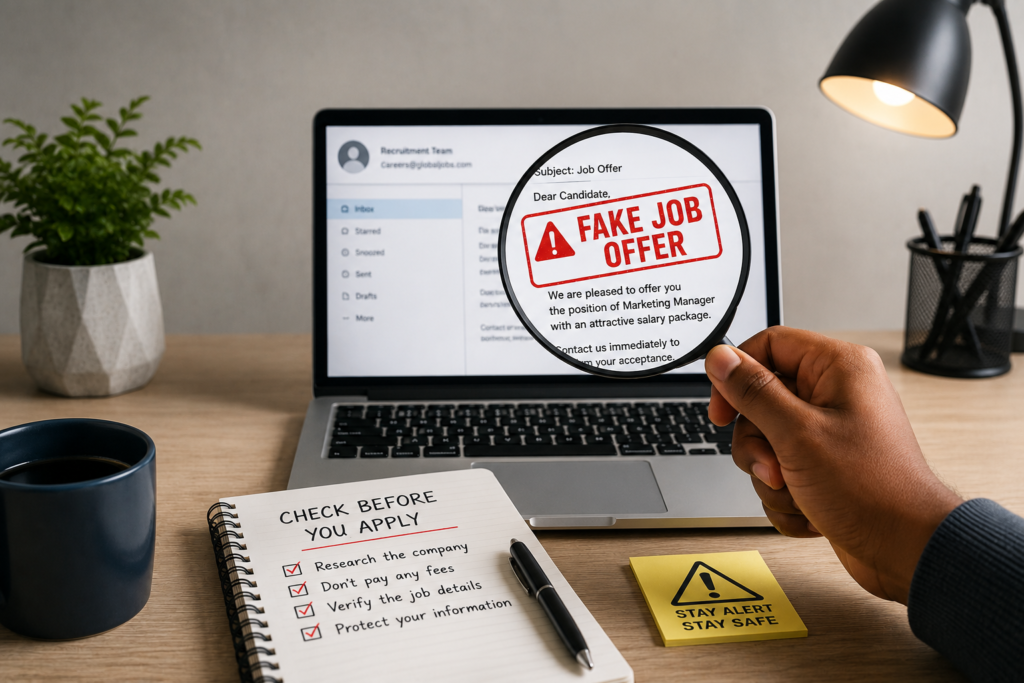
Job hunting should open doors, not create risk. Yet fake vacancies have become a common trap for people who are eager to work and quick to trust a polished advert. This is because some scams are obvious while others are carefully written to look like real opportunities from known firms, recruitment agencies, or even international companies. Fortunately, most fake job offers leave signs behind. That is why a careful check before you apply is so important.
Here are ten clear warning signs that should make you pause before you send an application.
1. A Job Offer That Promises Unrealistically High Pay
One of the first signs of a fake job offer is pay that sounds far beyond the role. A simple entry-level job may claim to offer a salary that is far higher than normal for that field, with little or no experience needed. The promise is often designed to catch your attention fast and stop you from thinking too deeply. Real employers do offer good pay, but they also match pay to the duties, skill level, and market rate. What you should do is to check similar vacancies from trusted sources and compare the pay range, if the offer looks too generous to be true. Scammers often use high pay to make the role appear rare, urgent, and valuable. A genuine vacancy should still make practical sense.
2. You Are Asked to Pay an Application or Processing Fee
A real employer wouldn’t ask you to pay to get a job. If you are told to pay, be it an application fee, processing fee, training fee, registration fee, or security fee before you can be considered, that is a major warning sign. In many cases, the money is the main aim, not the job itself. Some fake recruiters use small payment requests because they know many people will pay without questioning it. They may say the fee is refundable or needed to “secure your slot”. Do not be rushed by that language because a legitimate employer usually covers its own hiring costs. Before sending any money, check whether the company is real and whether the request appears on its official website or careers page. Oftentimes, the safest choice is to walk away and verify the source first.
3. The Employer Uses an Unprofessional Email Address
Fake job offers often rely on email addresses that look careless, strange, or slightly altered, while a genuine company normally uses a proper business email address. If the recruiter writes to you from a free email account, such as one ending in Gmail, Yahoo, or Hotmail, it does not always mean fraud, but it should make you cautious. It is also advisable to look closely at the full address because scammers sometimes copy a real company name but change one letter or add numbers. They may also send messages from different addresses each time, which makes them harder to trace. A real employer should be able to use a domain that matches its company name. You should also check whether the message signature, phone number, and reply address match the same organisation. If the contact details do not align, or the email sounds personal rather than official, pause before you respond, as small errors in the address can reveal a very large problem.
4. The Job Description Is Vague or Missing Key Details
A real vacancy should explain what the role involves, and a real employer should be able to describe the job in plain language. If the advert is full of general praise but light on actual duties, that is a concern. Fake job offers often use broad wording such as “earn big with little stress” or “join a fast-growing team” without saying what the job is, who you report to, or what success looks like. A proper vacancy normally states the job title, location, key responsibilities, required skills, working hours, and reporting line. If those details are missing, the advert may have been written to attract as many people as possible, regardless of fit. Some scammers keep things vague so they can change the story later when speaking to applicants. If you cannot clearly tell what the role is, it is not wise to apply.
5. You Receive a Job Offer Without an Interview
A job offer sent without any interview is another serious warning sign. In a normal hiring process, employers want to meet or at least speak with candidates before making a final decision. They may use phone screening, online interviews, practical tests, or face-to-face meetings, to confirm your experience, discuss the role, and explain the working arrangement. If someone offers you a job immediately after you send a CV, be careful. Scammers like to skip the interview stage because they want to move fast and keep you from asking questions. They may say the company is in a hurry or that your profile was “perfect” from the start. That should not stop you from checking the process. A job should be earned through a proper process, not handed out without discussion.
6. The Recruiter Pressures You to Respond Immediately
A genuine employer may set a deadline, but he/she should still allow time for you to think, ask questions, and verify the role. Fake recruiters often push for an instant reply. They may say you must accept today, sign quickly, or lose the opportunity forever. This kind of pressure is meant to stop careful checking because they know that fear can lead people to act quickly. They create false urgency so you do not look at the company website, compare the advert, or search for complaints online. A real employer should respect your need to review the offer. If the message is full of threats, emotional pressure, or repeated calls urging you to respond at once, slow down. Take the time to confirm the company, the role, and the contact person. Rushed decisions often help the scammer more than the applicant.
7. The Company Has Little or No Online Presence
A real employer should be easy to verify as most real companies now leave a trace online. They may have a website, social media pages, news coverage, staff profiles, or a careers page with current vacancies. If the company behind the advert has little or no online presence, or the information looks very thin, you should be careful. That does not always mean the business is fake, but it does mean you need more proof. What you should do is to search for the company name, and not just the job title. Check whether the website looks professional, whether the contact details match the advert, and whether the company has a physical address or recent activity. A fake job advert may use a made-up company name or borrow the name of a real business with little extra detail. Also check whether the company has a proper LinkedIn page or signs of real staff. If the search results are empty, inconsistent, or suspicious, do not rush to apply.
8. The Advert Contains Poor Grammar, Spelling, or Inconsistent Information
Poor writing alone is not proof of fraud, but it is one more reason to pause and verify the source. Bad grammar, spelling mistakes, awkward phrasing, and inconsistent formatting can all point to a fake advert. Some genuine companies do make errors, but a recruitment notice that is full of careless writing deserves closer attention. This is because scammers often copy and paste from several places, which can leave the advert looking messy or unprofessional. As a job seeker, look at the tone as well as the spelling. Does the text jump from formal language to casual slang? Are the job title and company name written in different ways? Are the salary details repeated in a confusing manner? These signs may show that the advert was not properly prepared or that it was assembled in a hurry. A trusted employer usually reviews its job posts before publishing them.
9. The Recruiter Requests Sensitive Personal or Financial Information Too Early
Identity theft and financial fraud often begin with small requests that seem harmless at first so you need to be very careful if a recruiter asks for sensitive information too early. This includes your bank details, card number, passport number, national identity number, or full date of birth before you have even confirmed the company. A real employer may need some details later in the hiring process, but not before basic checks are complete. Scammers may say they need the information for records, payroll, or background checks, and that can sound official, but it is still wise to question the request. Ask why the information is needed and whether there is a secure and official method for sharing it. Never send private documents to a stranger through an unverified email or messaging app. Abide by this safest rule: share only what is needed, only when needed, and only after you are sure the employer is real.
10. The Job Advertisement Is Not Listed on the Company’s Official Careers Page
A company that is really hiring should be able to confirm the vacancy on its own platform or through a known recruitment channel. Therefore, a job advert that does not appear on the company’s official careers page should make you stop and check further. Many scammers create fake adverts using company names that are easy to copy. They may post on job boards, social media, or messaging groups, then direct people to reply quickly before the truth is checked. As a job seeker, you should search the company’s own website and compare the vacancy details. If the role is not there, look for signs that the advert matches the firm’s real hiring style, location, and department names. Sometimes a genuine role may be shared through a partner recruiter, but there should still be a clear link to the employer. If the advert cannot be matched with anything official, do not treat it as safe.
The best protection against job scams is a calm mind and a careful routine because they copy what people want most: hope, speed, and opportunity. A few minutes of checking can save you from a costly mistake.