
As at 2026, We all Know That a Degree Is No Longer Enough
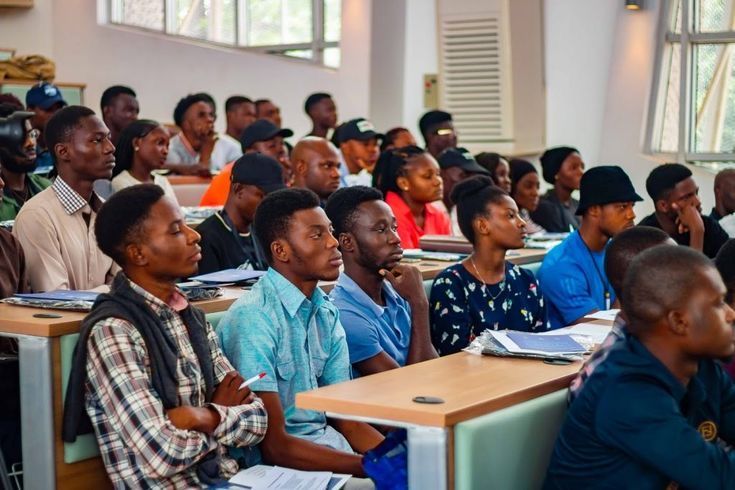
For many Nigerian undergraduates, university is still presented as the safest road to a better life. Parents are mandated to pay huge fees for their wards to spend four or more years studying, and everyone expects the degree to open doors. But what happens when the doors are looking for skills the degree did not teach?
The latest observation within the public is that Nigeria has a growing education problem that is difficult to ignore. And that is – graduates can leave university academically qualified but professionally unprepared. The International Labour Organisation has identified skills mismatch as a major problem in Nigeria, while the World Bank has noted that many workers with post-secondary education do not end up in occupations that properly use their qualifications. Imagine a scenario where a student may graduate with excellent grades but struggle with software, data analysis, communication, digital tools, practical problem-solving or workplace experience. The problem becomes more painful when employers demand experience from fresh graduates who have spent years in classrooms with limited exposure to real workplaces. A degree should be a foundation for a career, not the beginning of another expensive education after graduation. This raises the first uncomfortable question: are Nigerian universities preparing young people for employment, or mainly preparing them to pass examinations?
Another biggest controversy is that the Nigerian universities curriculum may be chasing the past. Technology, artificial intelligence, digital finance, renewable energy, e-commerce, data-driven businesses, and so much more, are changing the workplace rapidly. Yet, some lecturers still spend years following dormant course structures that have not kept pace with the economy. In November 2025, TETFund Executive Secretary Sonny Echono openly warned that outdated curricula, poor funding and an excessive focus on theory were contributing to graduate unemployment. He called for stronger training in areas including artificial intelligence, data science, renewable energy, entrepreneurship and financial literacy. That statement should make universities uncomfortable but they seemed indifferent about it.
It is easy to blame young graduates for not being employable, but students cannot learn what their institutions never exposed them to. At the same time, universities cannot simply turn themselves into short-term training centres for every new technology even though their responsibility is also to teach deep thinking and adaptable knowledge. In this case, another important question we should be asking is, if employers are already asking for skills that students are not learning, who is responsible for closing the gap?
There is another uncomfortable reality – a student can spend years studying a profession without gaining enough practical experience in it. This is particularly serious in fields where competence depends on equipment, technology, laboratories, projects and workplace exposure. In 2025, industry stakeholders highlighted the weak relationship between Nigerian tertiary institutions and industry, arguing that students often lack the hands-on experience needed to apply classroom knowledge. Consider an engineering student who graduates with strong theoretical knowledge but has barely worked with modern industrial equipment. Or a business student who can explain management theories but has never handled a real customer, analysed a company’s data or worked on a commercial project. The degree may be genuine, but the transition into employment can still be brutal. TETFund has also pointed to inadequate infrastructure, limited academic staff, brain drain, poor leadership and weak policy implementation as challenges affecting university quality.
If employers must spend heavily retraining graduates before they become useful, then, the education-to-employment pipeline is clearly not working as well as it should. Perhaps, the third question should not simply be whether students are studying hard enough. It should be – are universities giving students enough opportunities to practise what they study?
If you still aren’t convinced about the derogatory path which Nigeria’s education system is headed, maybe the clearest sign that something is wrong is what students do outside the university system. A graduate studying accounting may take online courses in data analysis. A computer science student may learn coding through YouTube, online academies or independent projects. A graduate with a degree in mass communication may teach themselves digital marketing, content creation, search engine optimisation or social media management because those are the prospective work opportunities they see around them. This self-development is admirable, but it also raises the fourth serious question: why should students have to build a second education to become employable when they’re already paying to be educated?
The World Bank has warned of both skills and experience gaps, while also pointing to an aspirational mismatch in which graduates often seek formal jobs even when growth is taking place in areas such as agribusiness, the digital economy and green energy.
Other critics believe there is another side to the argument, which is – universities cannot be blamed for every unemployment problem. Nigeria also has too few high-quality formal jobs for the number of people seeking them. The ILO has similarly identified structural problems, weak labour-market information and skills mismatches as part of Nigeria’s employment challenge. Maybe overall, the university is only one part of a much bigger problem.
So, What If We Completely Rethink the Way Forward?
The debate should not end with blaming universities, lecturers, students or the government. The fifth and harder question is – what happens if Nigeria refuses to change? We could continue producing thousands of graduates while employers complain about skills shortages, young people collect additional certificates and companies spend money retraining new employees. Or we could rethink what a university education should achieve. Imagine if every student graduated with both a degree and meaningful workplace experience. Imagine universities working closely with employers when reviewing courses, students solving real industry problems, laboratories receiving modern equipment, lecturers receiving continuous training and students learning practical digital skills alongside academic theory. These ideas are not entirely new. TETFund and other stakeholders have already called for stronger industry partnerships, practical learning and curriculum reform. The challenge is implementation. Nigeria has discussed education reform for years, yet the graduate still often stands at the end of university asking, “What can I actually do with this degree?” Maybe that is the question the system should have answered before graduation.
What if the way forward is not simply sending more young Nigerians to university, but making sure the education they receive genuinely connects to the lives, businesses and jobs waiting for them outside the university gates?