
Build a Professional Experience That Allows you Qualify for Better Job Opportunities.
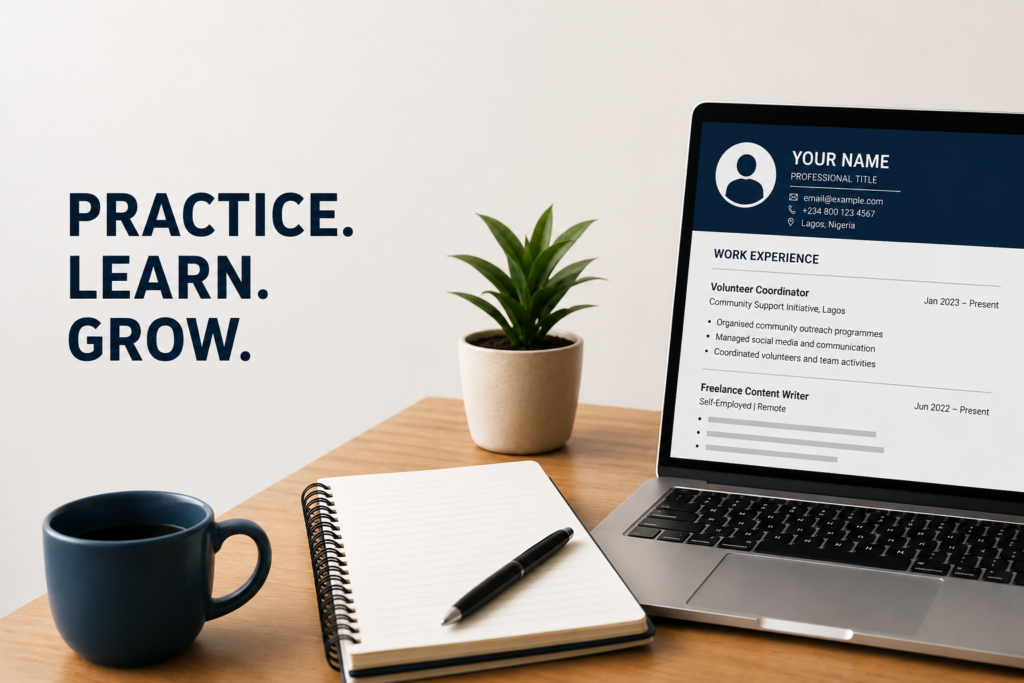
Many people believe that a permanent job is the only way to gain valuable work experience and this belief often leaves graduates, job seekers and career changers feeling discouraged when they cannot secure full-time employment. What most don’t know is that experience can be developed in many different ways. Building experience outside a traditional role can also help you discover new interests, improve your confidence and expand your professional network. Rather than waiting for the perfect opportunity, it is often better to make use of the opportunities already available.
These are ways you can go about it:
1. Take Advantage of Internship Opportunities
Internships remain one of the most effective ways to gain practical experience. They provide an opportunity to work in a professional environment, understand workplace expectations and develop skills that cannot always be learned in a classroom. Long or short-term internships can help you understand how businesses operate and how teams work together to achieve their goals. Internships also allow you to apply theoretical knowledge to real situations, making it easier to build confidence in your abilities. Many employers value candidates who have completed internships because they have already experienced the demands of a working environment. Whether the internship is paid or unpaid, the experience can strengthen your CV and improve your chances of securing future employment. The relationships you build during an internship may also lead to recommendations, mentorship or future job opportunities.
2. Volunteer to Develop Practical Skills
Volunteering is another valuable way to gain experience while contributing to a meaningful cause. Many charities, community groups and non-profit organisations rely on volunteers to support their daily activities. This creates opportunities for people to develop skills in administration, communication, project management, customer service and many other areas. Volunteering also demonstrates initiative, responsibility and a willingness to contribute to something larger than personal gain. These qualities are highly valued by employers. In addition, volunteering allows you to work with people from different backgrounds, which can improve your communication and teamwork skills. The experience you gain can be included on your CV and discussed during interviews. More importantly, volunteering can help you build confidence while creating a positive impact within your community.
3. Explore Freelance Work
Freelancing offers a practical way to gain experience by providing services directly to clients. It allows you to develop professional skills while working on real projects that produce measurable results. Whether you are a writer, designer, programmer, marketer or virtual assistant, freelance work can help you build a portfolio that demonstrates your abilities. Freelancing also teaches valuable skills such as time management, communication, problem-solving and client relations. Working independently often requires discipline and the ability to meet deadlines, both of which are attractive qualities to employers. Even small projects can provide evidence of your skills and strengthen your professional profile. Over time, freelance assignments can lead to larger opportunities, stronger networks and increased confidence. They can also provide an additional source of income while you continue searching for permanent employment.
4. Create Personal Projects
Personal projects can be powerful tools for developing experience and demonstrating your abilities. Instead of waiting for someone to assign you a task, you can create opportunities for yourself by working on projects related to your chosen career. A software developer might design an application, while a writer could build a blog that showcases different types of content. Also, a digital marketer could create a sample campaign to demonstrate practical knowledge. These projects allow you to experiment, learn from mistakes and improve your skills through practice. They also provide visible examples of your work that can be shared with potential employers. Personal projects show initiative and creativity, which are qualities that many organisations appreciate. They also help you build confidence by proving that you can apply your knowledge in practical situations.
5. Join Professional Associations
Professional associations can provide access to valuable learning opportunities and industry connections. Many organisations offer training programmes, seminars, conferences and networking events designed to support career development. Becoming a member of a professional association can help you stay informed about industry trends and emerging opportunities. It can also introduce you to experienced professionals who may offer guidance, mentorship or career advice. These associations often create environments where members can share knowledge and learn from one another. Participating in professional activities also demonstrates a commitment to continuous learning and personal growth. Employers often appreciate candidates who actively engage with their profession beyond their daily responsibilities. Building relationships within these communities can increase your visibility and create opportunities that may not be advertised through traditional job channels.
6. Support Small Businesses
Small businesses often need additional support but may not always have the resources to employ full-time staff. This creates opportunities for people who want to gain practical experience while helping businesses achieve their goals. Offering your skills to small businesses can expose you to a wide range of responsibilities that may not be available in larger organisations. You might assist with customer service, administration, social media management, bookkeeping or other important tasks. Because small businesses usually operate with limited resources, employees and assistants often develop a broader range of skills. This type of experience can make you more adaptable and versatile. It can also provide practical examples of your abilities that you can include in your CV. Supporting small businesses can therefore become an important step towards long-term career growth.
7. Accept Temporary and Contract Positions
Temporary roles can provide valuable experience while helping you remain active in the job market. Although these positions may not offer long-term security, they often provide opportunities to learn new skills, work with different teams and gain exposure to various industries. Temporary employment can also help you avoid long periods without professional activity, which can strengthen your CV. Many employers use short-term contracts to identify talented individuals who may later be considered for permanent positions. Working in different environments also helps you become more flexible and adaptable, which are important qualities in today’s changing workplace. Temporary positions can introduce you to new professional networks and expose you to different management styles. Even when a contract ends, the experience and relationships you gain can continue to support your future career development.
8. Participate in Professional Competitions
Competitions and professional challenges can provide opportunities to apply your knowledge in practical situations. They encourage creativity, critical thinking and problem-solving while allowing you to measure your abilities against recognised standards. Many industries organise competitions that enable participants to demonstrate their talents and gain recognition. These activities can help you build confidence and improve your portfolio by producing work that showcases your abilities. Competitions also encourage continuous learning because participants often develop new skills while preparing their submissions. In some cases, they can create opportunities for networking, mentorship and employment. Employers often appreciate candidates who actively seek opportunities to improve themselves and demonstrate their abilities. Participating in professional competitions shows determination and a willingness to challenge yourself, both of which are valuable in any career.
9. Use Your Community as a Learning Environment
Your local community can provide many opportunities to develop professional experience. Community groups, religious organisations, schools and local associations often need support with administrative, technical and creative tasks. Offering your services to these organisations can help you gain practical experience while contributing to meaningful activities. This approach also allows you to develop relationships with people who may recommend you for future opportunities. Working within your community can improve your communication skills, increase your confidence and provide examples of your abilities that can strengthen your CV. The experience you gain may seem small at first, but it can have a significant impact on your professional development. Every completed task adds to your experience and helps you build a stronger foundation for future career opportunities.
10. Build and Maintain a Strong Portfolio
A portfolio is one of the most effective ways to present your skills and experience to potential employers. It provides clear evidence of your abilities by displaying completed projects, achievements, volunteer activities and other examples of your work. A well-organised portfolio allows employers to see your progress and understand what you can contribute to an organisation. It also helps you keep track of your professional growth over time. Your portfolio should be updated regularly as you complete new projects or develop additional skills. Digital portfolios have become increasingly important because they can be shared quickly during job applications and interviews. A strong portfolio can sometimes create a greater impact than a traditional CV because it provides direct proof of your abilities. It serves as a valuable record of your professional journey.
Building work experience without a permanent job requires creativity, determination and a willingness to learn. And aside from these, there are also many ways to develop valuable skills. Good luck exploring.